Key takeaways
- Porcelain is the densest and the best all-rounder.
- Ceramic is easy to cut and good for light-use areas.
- Natural stone is unique but needs sealing and care.
- Finish and grout choices change how a floor looks and cleans.
Porcelain
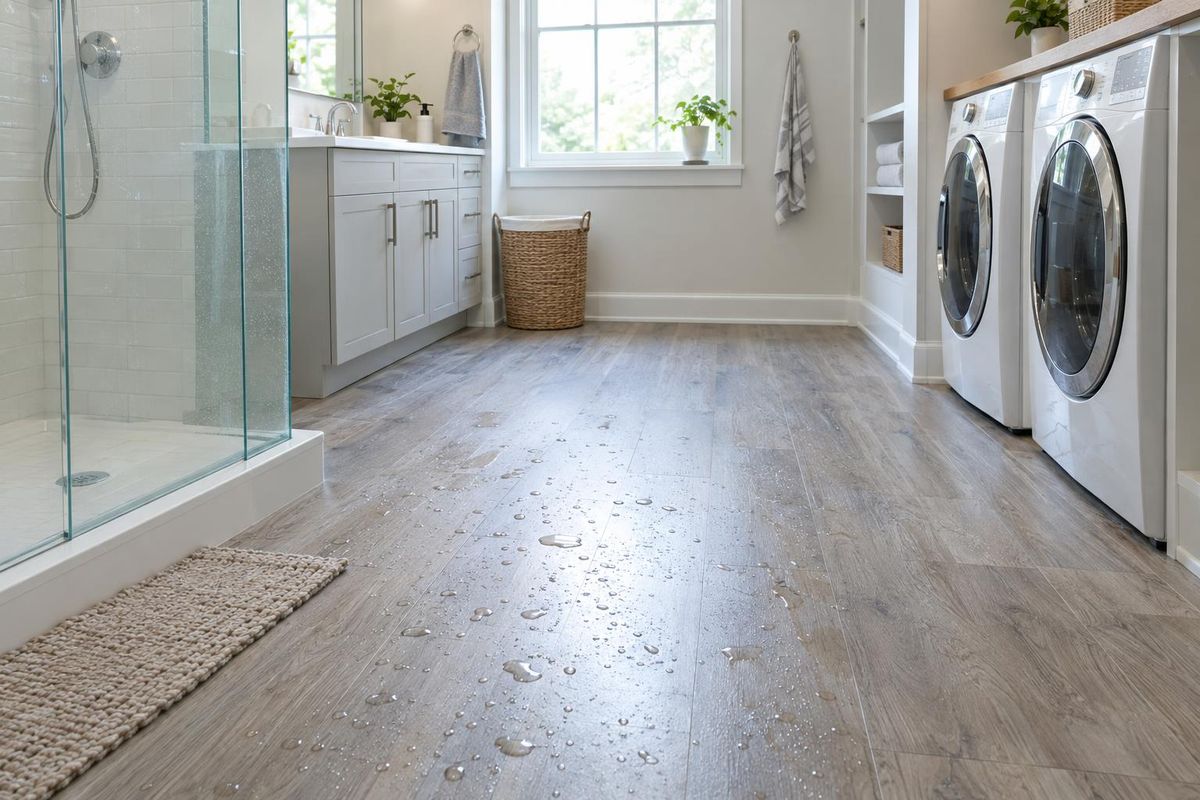
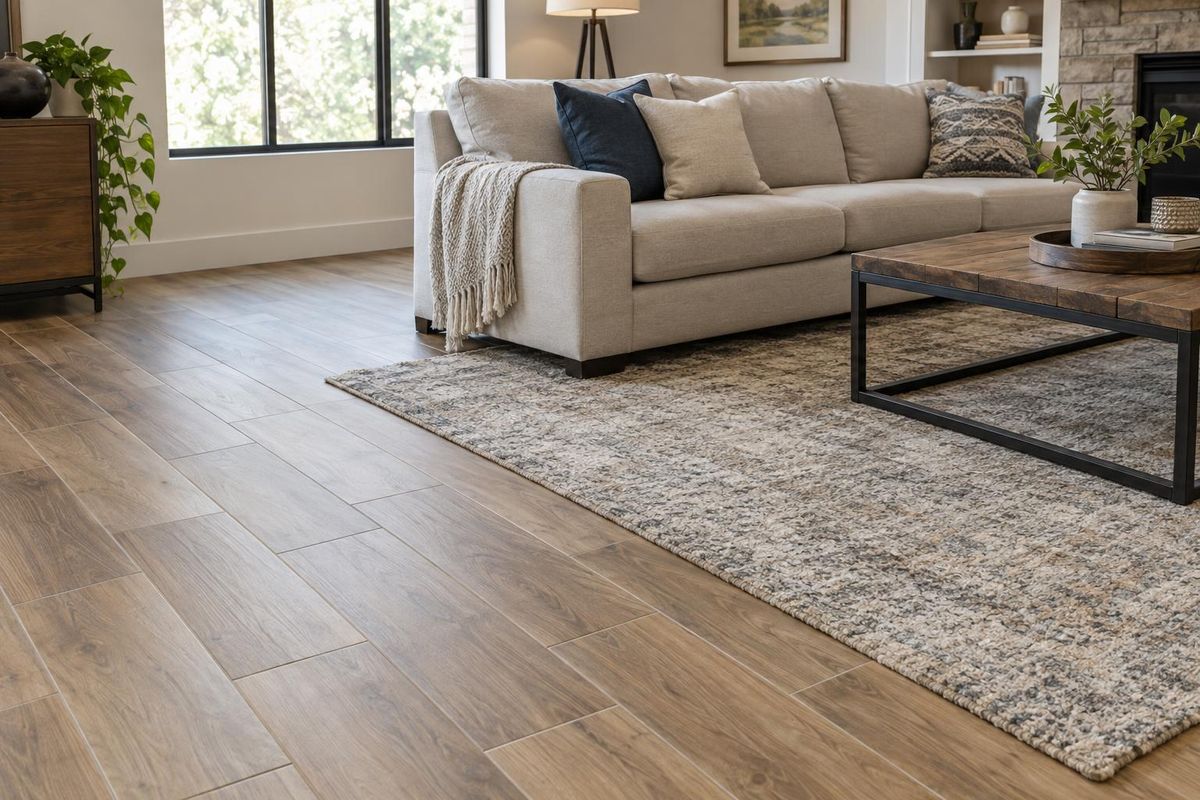
Porcelain tile is dense, strong and low in water absorption. It handles kitchens, entries, bathrooms and even outdoor spaces. Printed surfaces can mimic stone, wood and concrete convincingly.
Choose a textured or matte finish where slip resistance matters.
Ceramic
Ceramic tile is lighter and often easier to work with. It comes in many colors and patterns and is a good fit for walls and light-use floors.
Glazed ceramic can chip in heavy-use areas, so porcelain is usually the choice for busy floors.
Natural stone
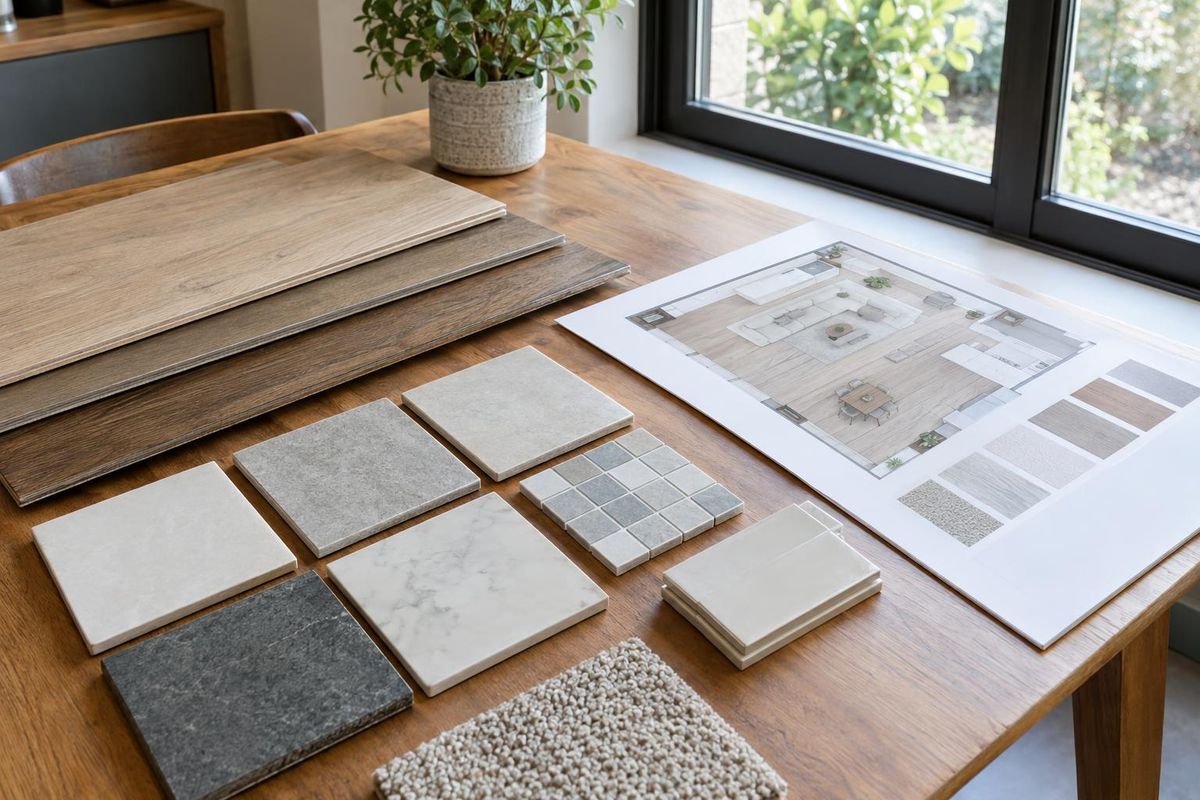
Marble, travertine, slate and limestone have natural variation that no print can copy. They also need to be sealed, can stain or etch and need the right setting materials.
If you love the look but not the upkeep, a stone-look porcelain tile is a solid substitute.
Size, finish and grout
Larger tiles mean fewer grout lines and a cleaner look but need a flatter floor. Smaller tiles and mosaics grip better and suit showers and curved areas.
Choose grout color to blend or contrast on purpose. Epoxy grout resists stains the best; cement grout should be sealed.
Quick answers
What tile size is best for a small bathroom?
Many people use medium tiles on the floor and small mosaics in the shower. Large tile can also work if the floor is flat.
Do I have to seal porcelain?
The tile itself does not need sealing, but cement grout should be sealed.