Key takeaways
- Wear layer thickness matters most for vinyl.
- AC ratings describe laminate durability.
- PEI and COF describe tile wear and slip resistance.
- Janka hardness describes how well wood resists dents.
Vinyl: wear layer and thickness
The wear layer on luxury vinyl is measured in mils. Thicker wear layers resist scratches longer; many homes do well with a moderate layer, while heavy-use areas call for more. Total thickness and core type affect comfort and stability.
A rigid core resists dents and temperature changes better than a flexible one.
Laminate: AC rating
Laminate uses an abrasion class from AC1 to AC5. Higher numbers handle more traffic. AC3 and above are common in homes; AC4 and AC5 suit commercial use.
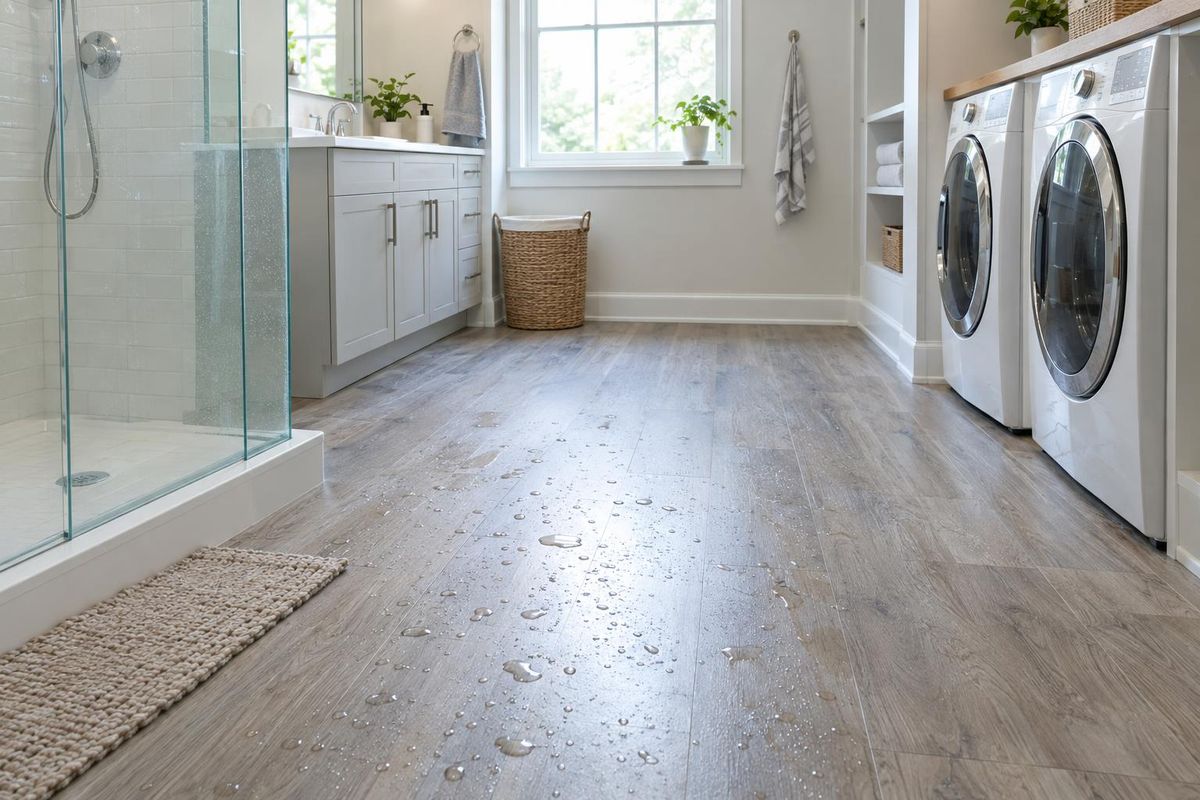
Also look at the water-resistance claims and the thickness of the core.
Tile: PEI and COF
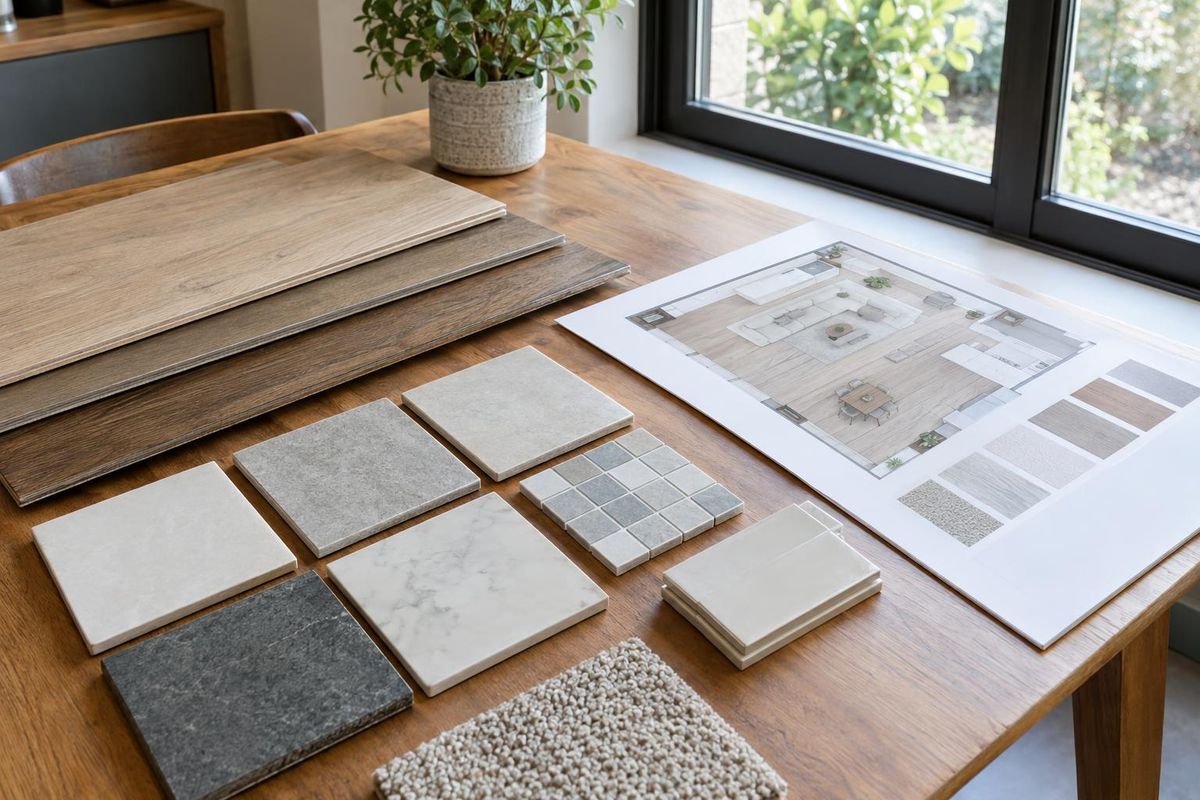
PEI describes how well the glaze resists wear, from 0 to 5. Floor tile is usually 3 or above. COF, or coefficient of friction, tells you how slip-resistant the surface is; look for higher numbers in wet areas.
Water absorption tells you how dense the tile is; the lowest is porcelain.
Wood: Janka hardness
The Janka test measures how much force it takes to push a steel ball into the wood. Higher numbers mean harder wood. It is useful for comparing species, but finish and care matter too.
For engineered wood, check the wear layer thickness, since it affects refinishing.
Quick answers
Is a thicker plank always better?
Not always. Core type, wear layer and installation matter as much as total thickness.
What AC rating do I need?
AC3 is common for living rooms and bedrooms. For busy homes or commercial spaces, AC4 or higher is a good pick.