Key takeaways
- Test the slab for moisture before choosing a floor.
- Waterproof plank, tile and carpet tile are strong basement choices.
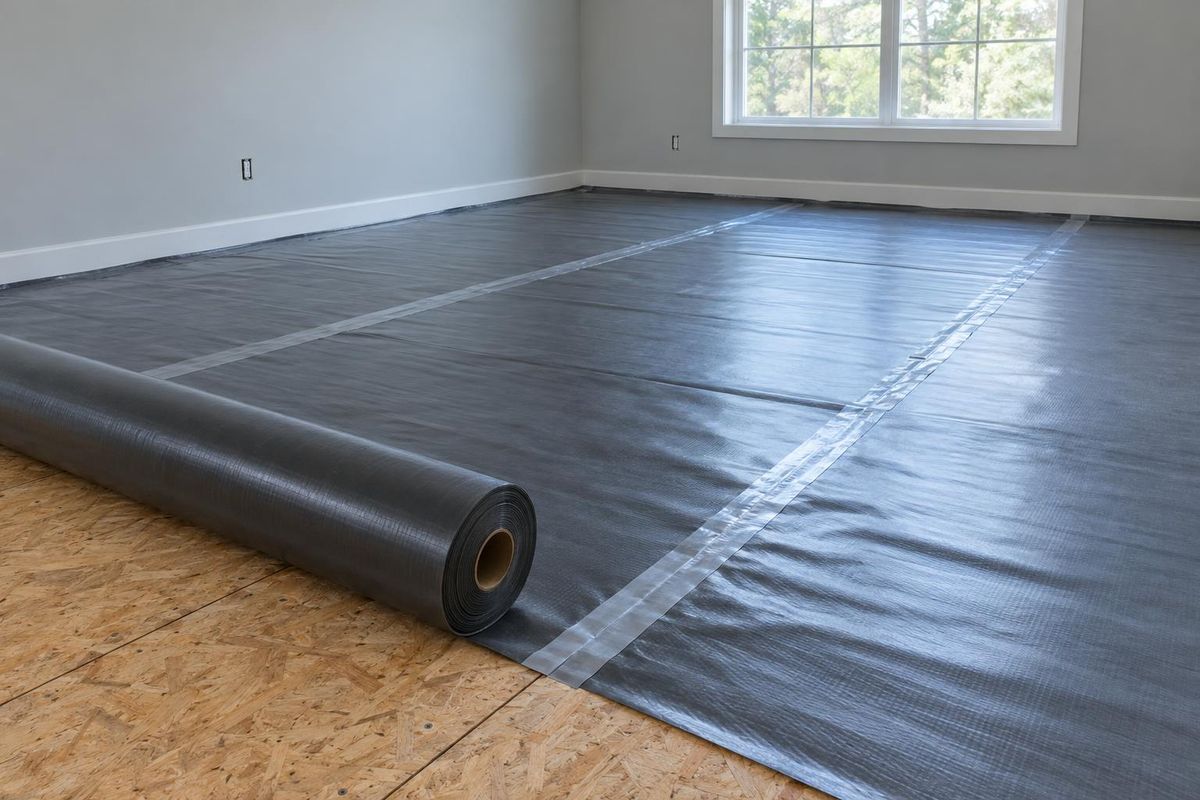
- A vapor barrier or moisture-control coating protects wood and laminate.
- Fix water entry at the source first.
Start with moisture
Concrete is porous and carries vapor. Before any floor goes in, the slab should be tested. High readings call for a barrier or a floor that tolerates moisture. If water is entering the room, no floor will solve it; the source has to be fixed.
A basement that smells musty or has white powder on the walls needs attention before flooring.
Floors that suit basements
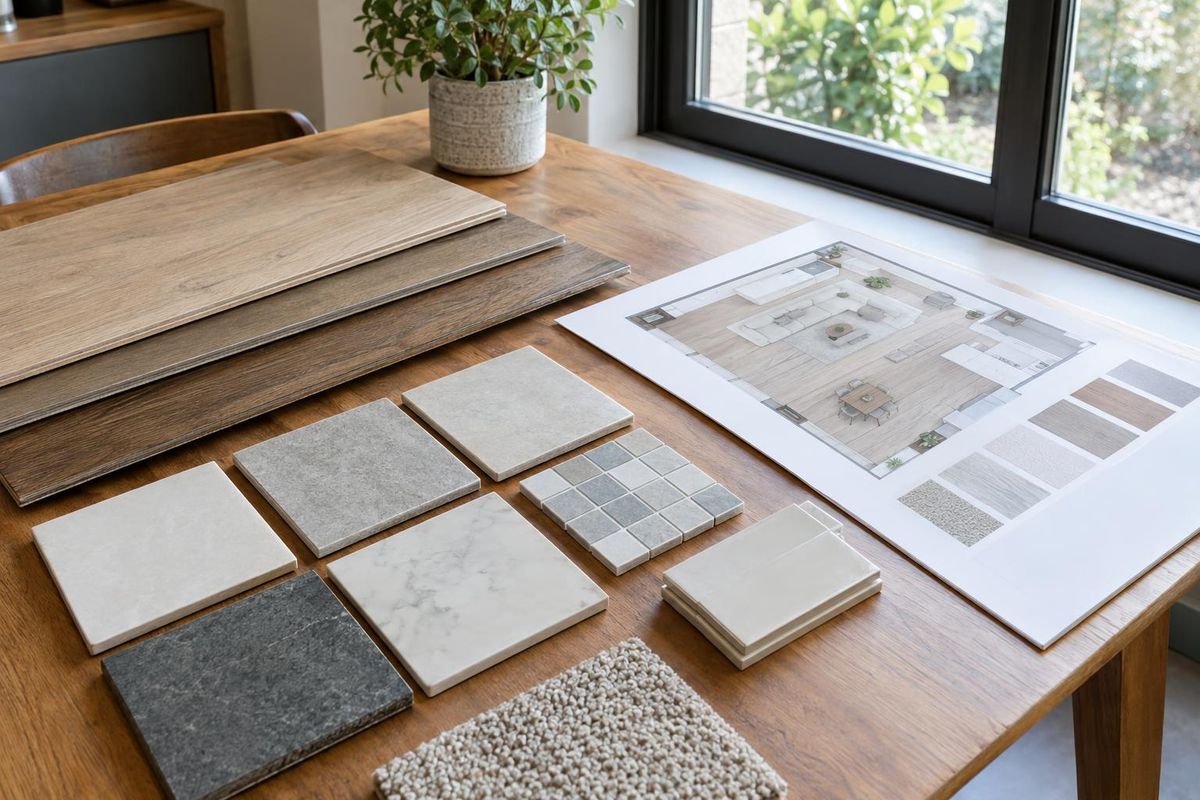
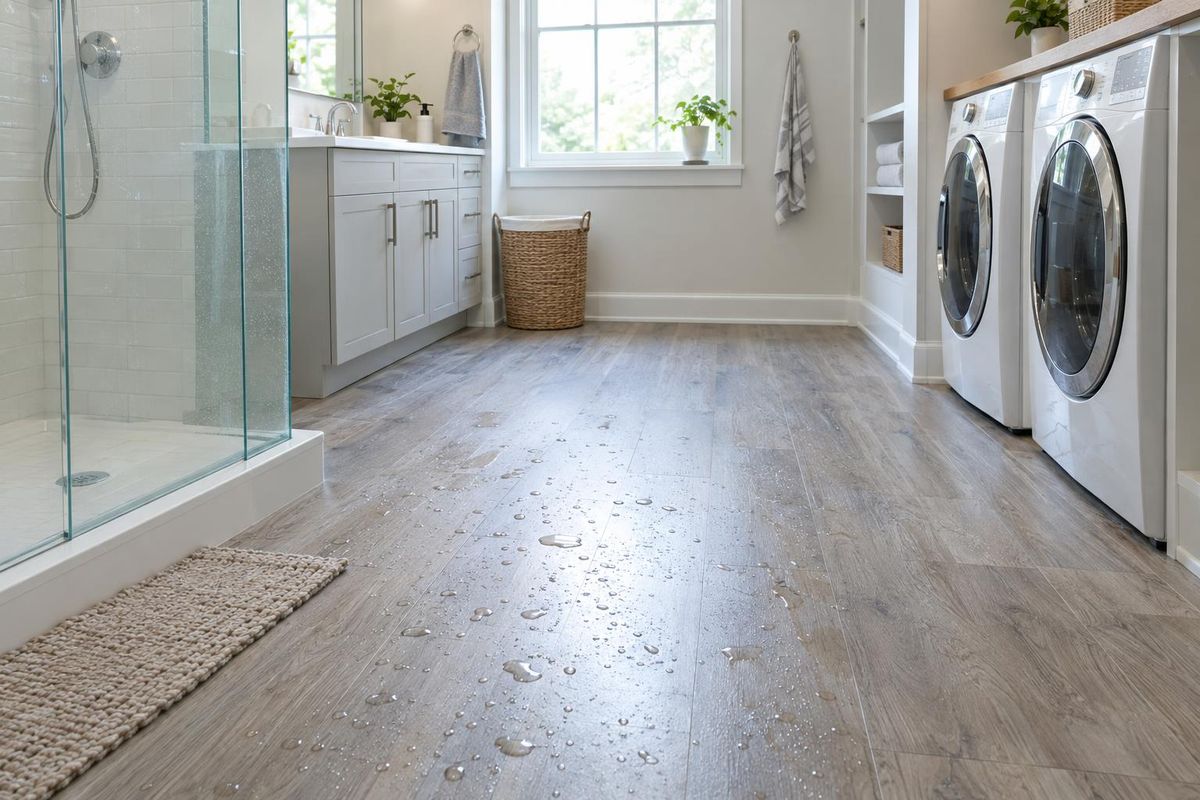
Waterproof rigid-core vinyl plank, porcelain tile, carpet tile and sealed or polished concrete are the usual options. Engineered hardwood can work with a barrier and moisture control, but solid wood should be avoided.
For warmth, an underlayment with a thermal break or radiant heat under tile makes a big difference.
Leveling and prep
Basement slabs are often not flat. Large tiles and click-lock plank need a flat surface, so leveling compound is often part of the plan.
Cracks should be repaired, and any old adhesive removed.
Finish the details
Leave an expansion gap at the walls, use moisture-resistant trim and pick transitions that sit flush at stairs and doors.
Keep humidity in check with a dehumidifier to protect the floor over time.
Quick answers
Can I put hardwood in a basement?
Engineered hardwood can work with a moisture barrier and humidity control. Solid hardwood is not recommended.
Is carpet a bad choice for a basement?
Carpet with a moisture-resistant pad or carpet tile can work if the room stays dry.