Key takeaways
- Start with how the room is used, not with how the sample looks.
- Wet rooms need waterproof or sealed floors; bedrooms can be soft and quiet.
- Keeping a similar tone through the house makes it feel bigger.
- See samples in your own light before you decide.
Start with the way you live
The best floor for a house is the one that suits the people in it. Think about pets, kids, shoes on or off, how much you cook and how much sun your rooms get. A floor that looks lovely but fights your daily habits will always feel like a mistake.
Write down the three things you want most from the floor: warmth, easy care, a certain look or a long life. Those priorities narrow the choices very quickly.
Kitchens, baths and laundry rooms
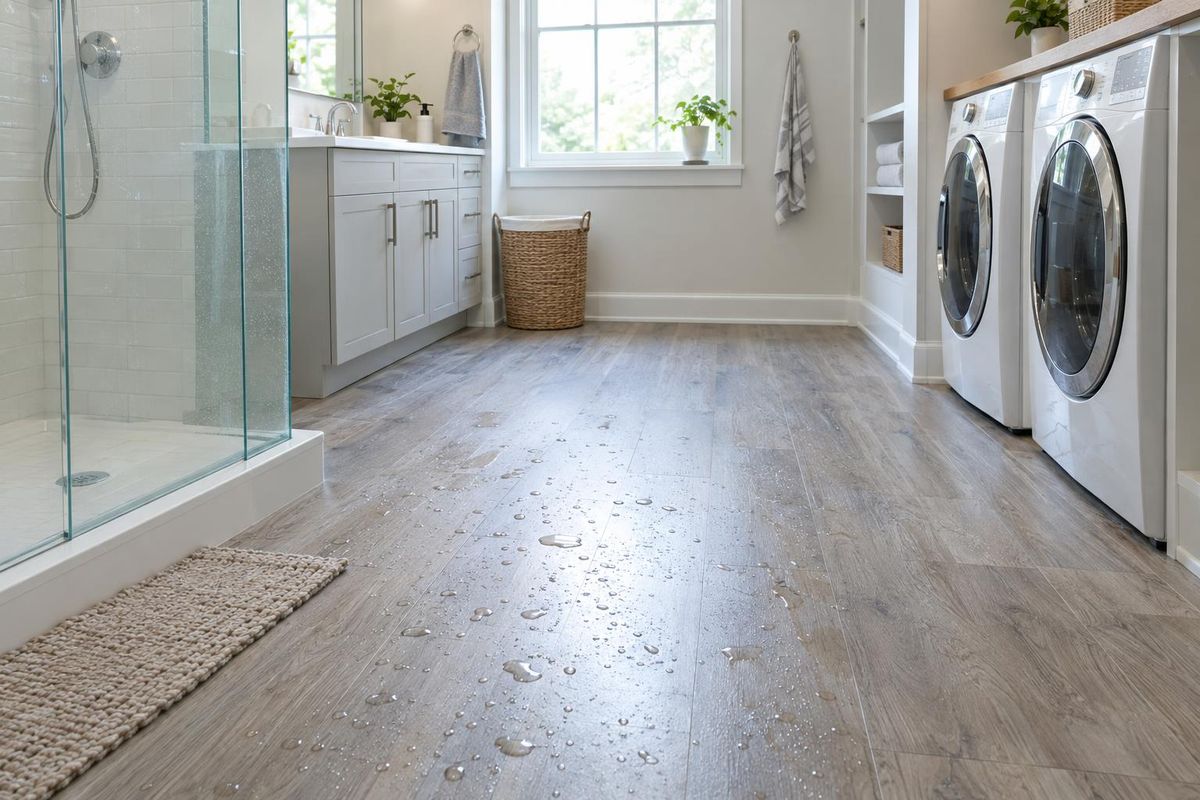
These rooms see spills and humidity. Porcelain tile, waterproof luxury vinyl plank and sealed natural stone are the usual choices. Solid hardwood can work in a kitchen with care but is not suited to full baths.
Look for slip resistance in bathrooms and entries, and plan transitions where the floor changes.
Living areas and bedrooms
These are the rooms where warmth and comfort matter. Hardwood, engineered hardwood and quality luxury vinyl plank all make good living-room floors. Carpet is still the quietest and softest choice for bedrooms.
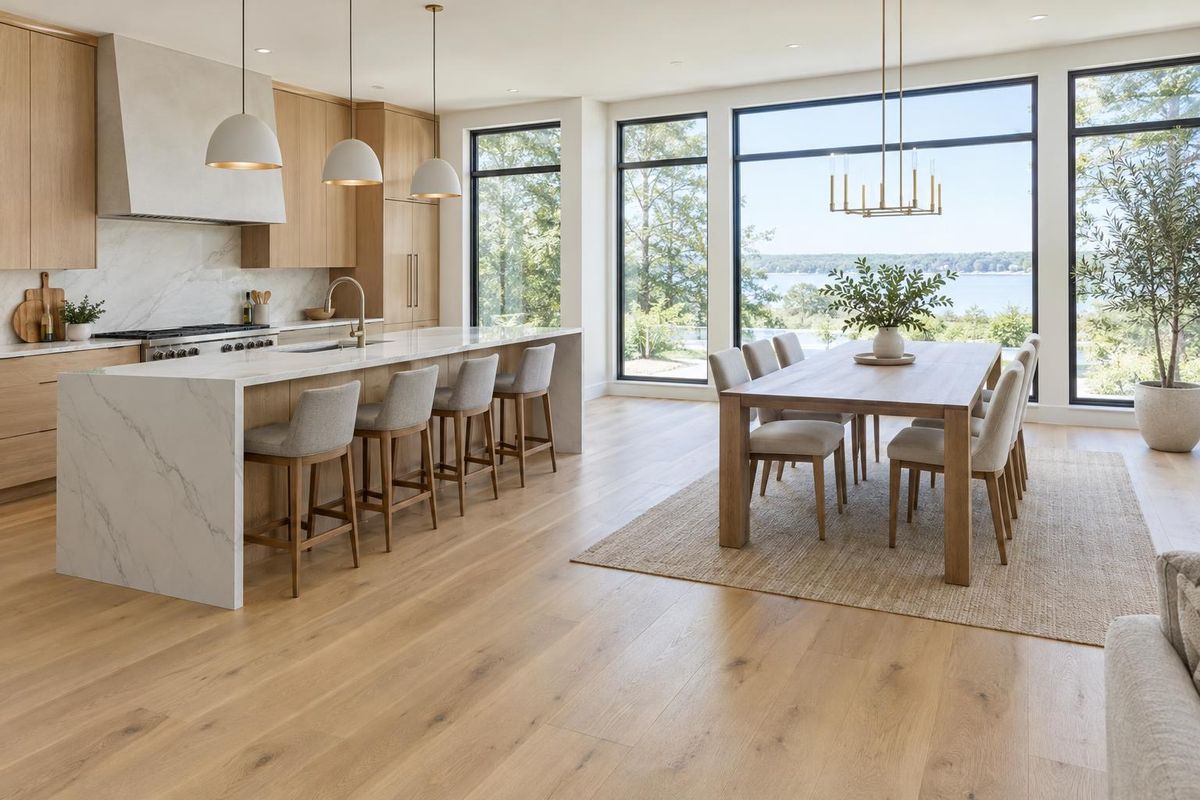
In open floor plans, running one flooring through the main living spaces makes the house feel larger and calmer.
Basements, entries and stairs
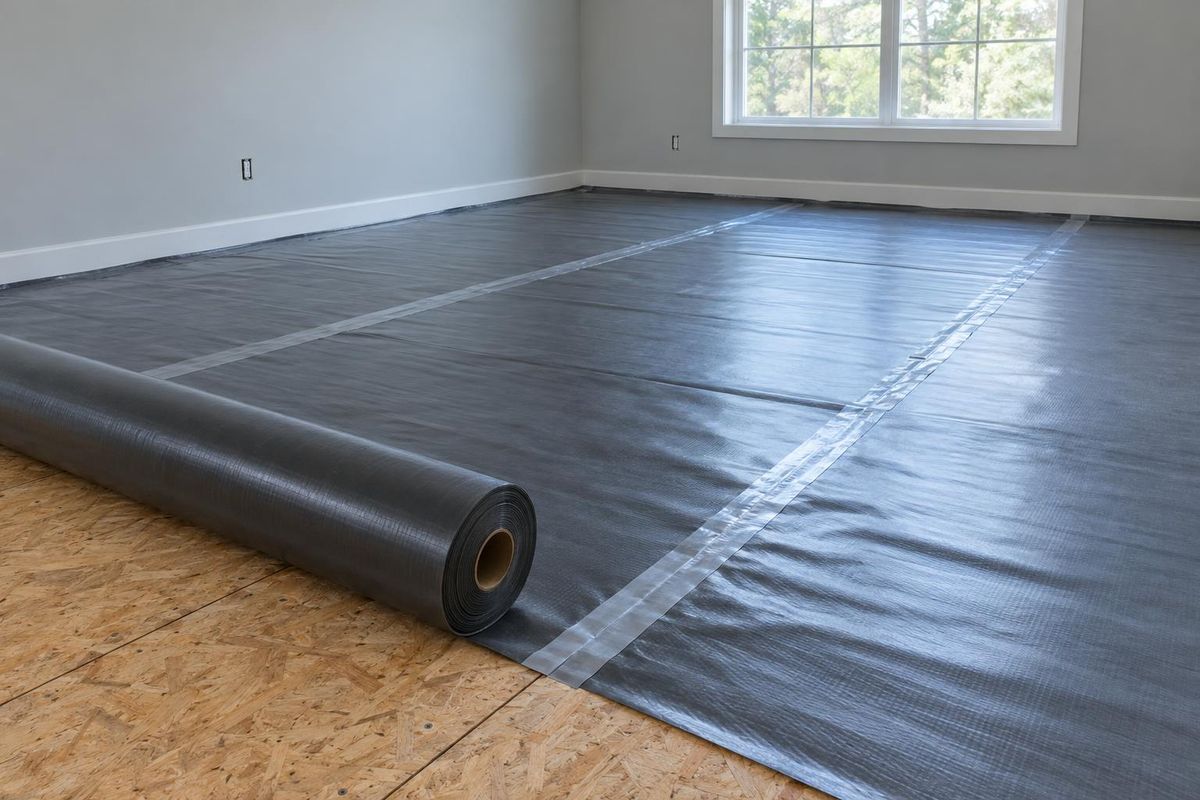
Basements need moisture control first, then a floor that tolerates it: waterproof plank, tile or sealed concrete. Entries need tough, wipe-clean surfaces. Stairs need safe grip and matching nosings.
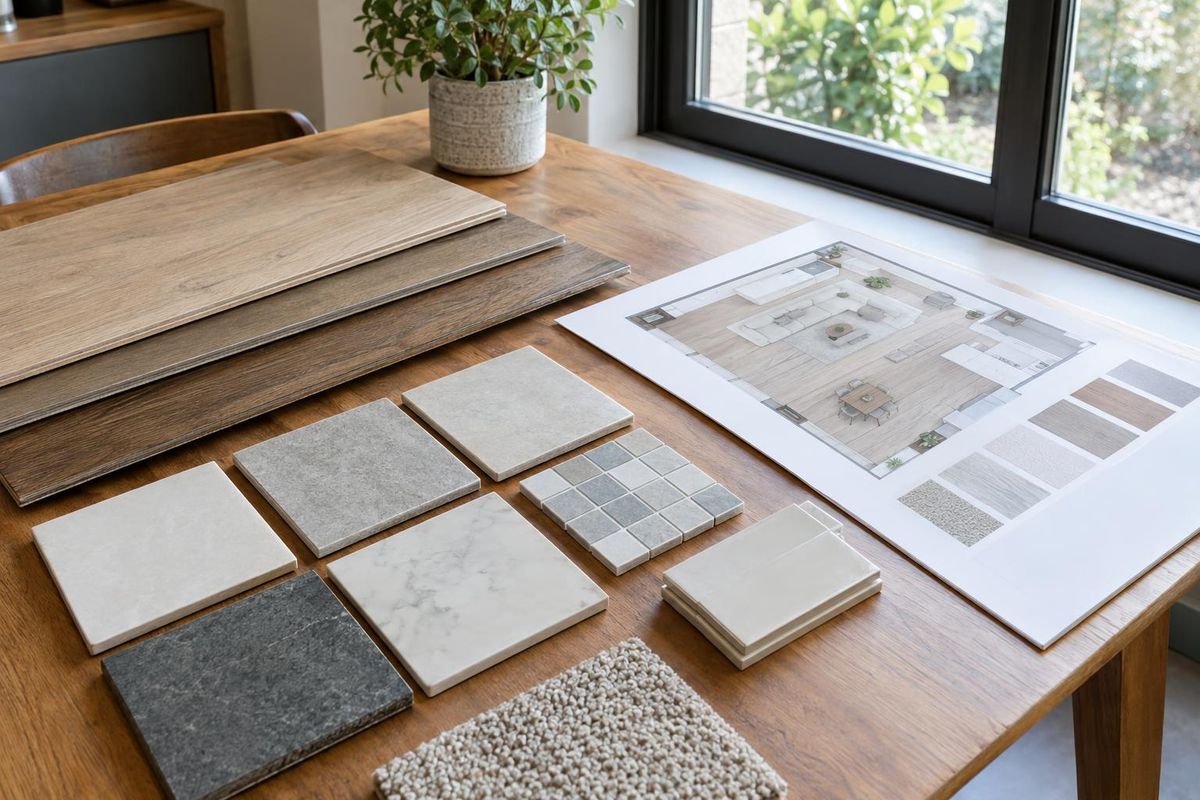
Ask for samples of each material and look at them in the morning and evening light.
Quick answers
How many different floors should a house have?
Fewer is usually better. Many homes use one main floor through living areas, tile in wet rooms and carpet or the same floor upstairs.
Should floors match the cabinets?
They should coordinate, not match exactly. Aim for a contrast in tone or a shared undertone.